EU Amends Corporate Due Diligence Rules: New Timeline for Leather Jacket Suppliers
- Share
- publisher
- Melvin
- Issue Time
- Sep 13,2026
Summary
On February 26, 2026, the European Union published Directive (EU) 2026/470 in the Official Journal, amending the Corporate Sustainability Due Diligence Directive.

On February 26, 2026, the European Union published Directive (EU) 2026/470 in the Official Journal, amending the Corporate Sustainability Due Diligence Directive. The directive entered into force on March 18, 2026.
The amended rules move national transposition to July 26, 2028 and first application to July 26, 2029.
For leather jacket suppliers selling into the EU, the more consequential change is the protection the directive now extends to smaller business partners in the value chain.
What the Amended Directive Actually Changes
The amendments arrived through the Omnibus I simplification package. Directive (EU) 2025/794 postponed certain application dates, while Directive (EU) 2026/470 introduced the substantive sustainability reporting and due diligence amendments.
Member States must adopt and publish national transposition measures by July 26, 2028 and apply them from July 26, 2029. The exception is the Article 16 reporting measures, which apply for financial years starting on or after January 1, 2030.
The European Commission states that companies may now focus on the areas where impacts are most likely and most severe, based on reasonably available information.
Who Falls Inside the Scope
The directive targets very large companies rather than the wider supply base. Large EU companies and partnerships are in scope at 5,000 employees or more and EUR 1.5 billion in net worldwide turnover, including on a consolidated basis for ultimate parent companies of groups.
Large non-EU companies are in scope at EUR 1.5 billion in net turnover in the EU, again including on a consolidated basis for ultimate parent companies of groups. Franchising and licensing arrangements may also bring companies or group parents into scope where the directive royalty and turnover thresholds are met.
Micro companies and SMEs are not covered. The directive instead provides supporting and protective measures for SMEs, Small Midcaps and other smaller business partners that may be indirectly affected in the chains of activities of companies in scope.
The Part That Matters to Leather Jacket Suppliers
Those protective measures include limits on information requests, guidance and model contractual clauses. For a manufacturer answering buyer questionnaires, that framing matters as much as the deadline itself.
Enforcement sits with national supervisory authorities designated by Member States. They can issue injunctive orders and impose effective, proportionate and dissuasive penalties, with a maximum of 3% of a company's net worldwide turnover for the most serious violations.
Where a company is held liable under national law for damage caused by a failure to comply with the due diligence requirements, affected persons have a right to full compensation. At EU level, the Commission will set up a European Network of Supervisory Authorities to coordinate the national bodies.
Commission guidance and voluntary model contractual clauses are intended to help companies conduct due diligence. The main guidelines are due by July 26, 2027, with additional ones by July 26, 2028.
Planning Around the 2028 and 2029 Dates
Three steps follow from the timeline.
- Expect buyer questionnaires to be reshaped by the model contractual clauses rather than by each customer's own format.
- Keep material and subcontractor records current, because the directive still asks in-scope companies to identify impacts across their chains of activities.
- Watch the guidance dates, since the July 2027 guidelines will define what counts as reasonably available information.
Buyers tracking European compliance should also note the separate EU deforestation rules, which were amended in July 2026 and carry their own application date of December 30, 2026.
Where Danke Sits
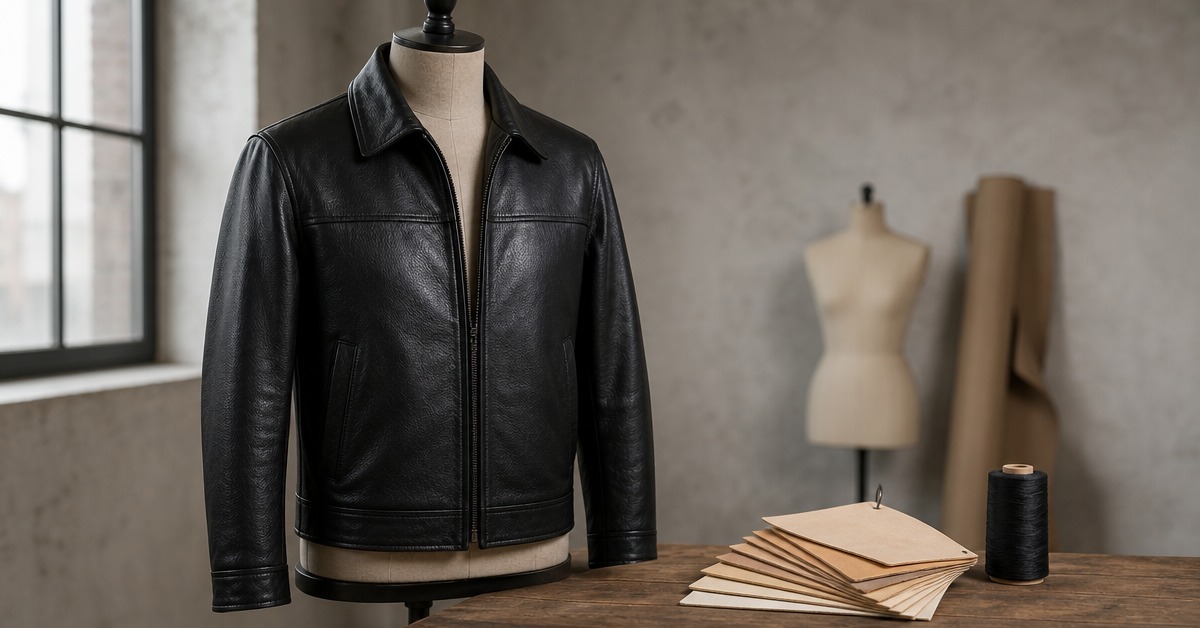
Danke (Dalian Danke Fashion Co., Ltd) is a leather garment manufacturer based in Dalian, China, with more than 30 years of experience producing custom and private label leather jackets for international B2B buyers, and a minimum order quantity below 100 pieces.
Buyers can review men's leather jacket styles on the Danke product page, follow the leather jacket manufacturing process step by step, or look at the private label development service used by brands building their own lines.
Danke documents materials, sampling and bulk quality so buyers can answer their own due diligence questions from records rather than from estimates. For sourcing enquiries, contact the team at www.dankeleatherjacket.com or on WhatsApp at +86 13234076432.
FAQ
Does the CSDDD apply directly to leather jacket factories outside the EU?
No. The directive applies to large EU companies and partnerships at 5,000 employees and EUR 1.5 billion net worldwide turnover, and to large non-EU companies at EUR 1.5 billion net turnover in the EU. A manufacturing supplier is affected indirectly, through the chains of activities of the customers that are in scope.
When do the amended dates take effect?
Member States must adopt and publish national transposition measures by July 26, 2028 and apply them from July 26, 2029. The Article 16 reporting measures apply for financial years starting on or after January 1, 2030. Commission guidance is due by July 26, 2027, with additional guidance by July 26, 2028.
What can an EU buyer still ask a smaller supplier for?
The directive provides supporting and protective measures for SMEs, Small Midcaps and other smaller business partners, including limits on information requests, guidance and model contractual clauses. The precise limits will be shaped by national transposition and by the Commission guidance due by July 26, 2027.