EU Forced Labour Guidelines Published: Five Dates Leather Jacket Buyers Should Diary
- Share
- publisher
- Melvin
- Issue Time
- Sep 19,2026
Summary
The European Commission's guidelines for the EU's forced labour ban were published in the Official Journal on September 3, 2026, setting out how authorities will police imports of leather jacket supplies once enforcement begins on December 14, 2027.
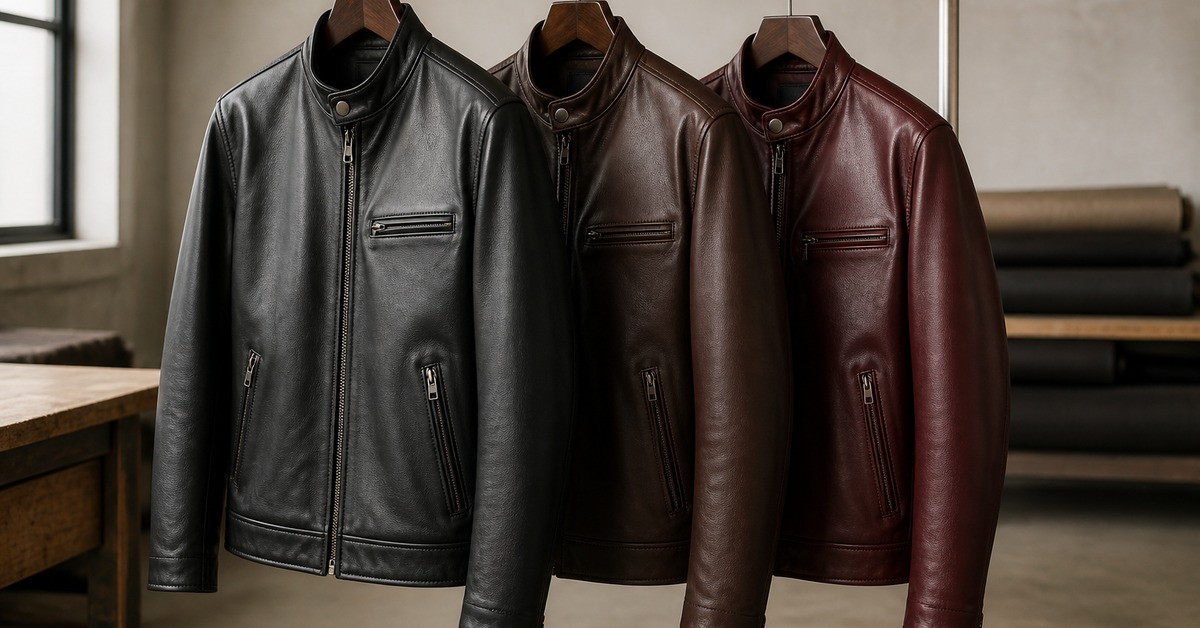
The European Commission published its guidelines for the EU's forced labour ban in the Official Journal on September 3, 2026, setting out how authorities will police imports of leather jacket supplies once enforcement starts on December 14, 2027. Issued as Commission Notice C/2026/4386, the guidelines create no new certificate for a leather jacket factory.
What the EU Forced Labour Regulation Bans
Regulation (EU) 2024/3015 was adopted on November 19, 2024. From December 14, 2027, no product made with forced labour may be sold in the EU market or exported from it.
The ban covers all products regardless of origin and applies to every company placing products on the EU market or exporting from it, including manufacturers, importers, distributors, retailers and online sellers.
A product falls under the rules when it is made in whole or in part with forced labour at any stage of extraction, harvesting, production or manufacturing. The size of the affected share is irrelevant.
The rules cover goods placed on the EU market from December 14, 2027 even if they were produced or imported earlier. Stock on shelves or in warehouses is in scope; goods already sold to an end user are not.
Five Dates That Shape a 2027 Sourcing Calendar
June 30, 2026. The Commission launched its preparedness package and the Forced Labour Single Portal, which gathers the guidelines, traceability tools, the list of national authorities and an SME checklist.
September 3, 2026. The guidelines were published in the Official Journal, opening the window in which buyers can align supplier documentation with the process authorities describe.
October 20, 2026. The Commission holds a textile-sector implementation webinar, from 14:30 to 16:30 CEST, on supply chain visibility and supplier engagement.
December 14, 2026. EU Member States must notify the Commission of their financial penalty rules, which is when the cost of non-compliance becomes knowable.
December 14, 2027. The Regulation becomes applicable. The Commission investigates cases outside the EU; national authorities investigate cases inside their territory.
What Authorities May Ask a Leather Jacket Importer to Show
The Regulation introduces no audit or reporting obligations and imposes no due diligence duties. Companies decide how to establish that their products are free from forced labour. The Commission notes that traceability, responsible purchasing practices, certification schemes and worker-driven monitoring can each be effective.
Where an authority requests information during a formal investigation, it must allow at least 30 working days and no more than 60 working days to respond, and extensions may be requested.
Documented examples include supply chain maps covering tiers and sub-tiers with direct and indirect suppliers, product traceability evidence such as chain-of-custody certificates and raw material data, and records showing that a grievance mechanism exists.
Inspections are possible. The Commission may, in exceptional circumstances, conduct checks outside the EU with the consent of the operator and the government concerned. Refusing that consent may be treated as non-cooperation, and an authority facing non-cooperation must establish a violation on the other facts available.
Where the Penalties Actually Land
Penalties are not imposed for breaching the ban itself, but for failing to comply with a ban-violation decision. Member States set the amounts, and each penalty must be effective, proportionate and dissuasive; the Regulation fixes no minimum or maximum.
When forced labour is confirmed, the product is banned from the EU market and must be withdrawn and disposed of, with customs authorities enforcing decisions at the EU's external border.
For products in a supply chain of strategic or critical importance to the EU, an authority may instead require the operator to withhold the goods at its own expense while the forced labour is eliminated.
The EU database of forced labour risks remains in development. It is described as indicative rather than exhaustive and draws only on evidence from international organisations, public institutions and research bodies.
What This Means for Your Next Leather Jacket Programme
Nothing in the guidelines changes how a leather jacket is cut, tanned or finished. What changes is the evidence burden that travels with the order. Buyers who request factory-level records at the sampling stage avoid reconstructing them inside an investigation window measured in working days.
Danke, the export brand of Dalian Danke Fashion Co., Ltd, manufactures men's leather jackets for wholesale and private-label programmes and works with buyers on order-level documentation requests from the first sample onward.
To map the documentation you will need for an upcoming leather jacket order, review the range at www.dankeleatherjacket.com or message the export team on WhatsApp at +86 13234076432.
For related reading, see the EU rules on destroying unsold leather apparel, how to build a custom leather jacket line for your brand and the production process behind every Danke men's leather jacket.
The full notice is at EUR-Lex, Commission Notice C/2026/4386, and the supporting tools at the Forced Labour Single Portal.
Does the Forced Labour Regulation require due diligence?
No. The Regulation imposes no due diligence, audit or reporting obligation. Due diligence is one route a company may choose, and the Commission publishes voluntary guidance on it. The Corporate Sustainability Due Diligence Directive remains a separate instrument.
Are leather jackets covered by the ban?
The Regulation applies to all products without a sector exemption, so leather apparel falls within scope. Coverage depends on the supply chain rather than the product category. The Commission's risk database is still in development.
What happens if a product is found to be made with forced labour?
A ban-violation decision removes the product from the EU market, and the operator must withdraw and dispose of it. Customs authorities enforce the decision at the border. Failing to comply with that decision is what triggers a financial penalty.