EU Leather Jacket Imports Rise 10 Percent in Late Summer 2026 as Turkey Outpaces Rivals
- Share
- publisher
- Melvin
- Issue Time
- Oct 28,2026
Summary
EU importers bought EUR 218.4 million of leather apparel and clothing accessories from outside the bloc in July and August 2026, 10.0 percent more than a year earlier, Eurostat data show. January to August imports reached EUR 748.0 million, up 2.5 percent, with Turkey the fastest-growing large supplier.
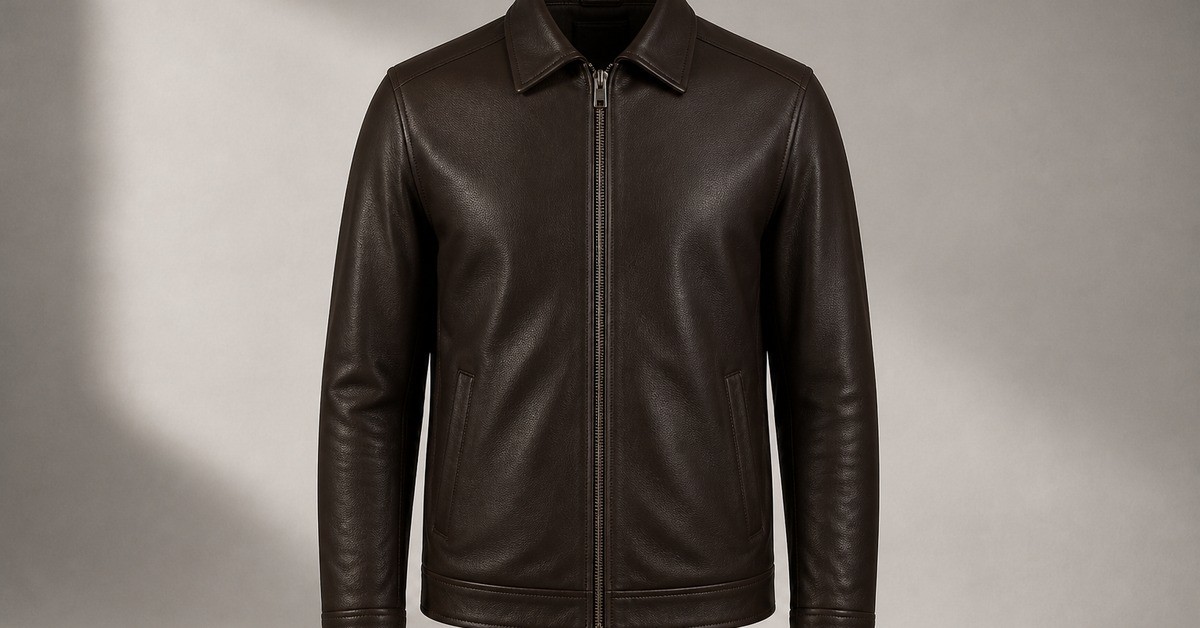
European Union importers bought EUR 218.4 million of leather apparel and clothing accessories from outside the bloc in July and August 2026, 10.0 percent more than in the same two months of 2025, according to Eurostat trade data updated on October 16, 2026.
The increase lifted imports for January to August to EUR 748.0 million, 2.5 percent above the same period last year and slower than the 9.2 percent recorded in 2025. Turkey was the fastest-growing supplier among the six largest origins in the period.
HS 4203, the customs heading behind these figures, covers leather jackets, coats, trousers and gloves. The totals therefore describe the wider leather apparel trade rather than the jacket segment alone.
A buying cycle that peaks in late summer
European buyers of autumn and winter leather outerwear usually place orders in the first half of the year, with shipments arriving between July and September. The monthly data follow that pattern. Imports ran between EUR 80.5 million and EUR 86.5 million a month from March to May 2026, then rose to EUR 109.5 million in July and EUR 108.9 million in August.
The two-year comparison is more informative than a single month. Imports for January to August were EUR 668.5 million in 2024, EUR 730.0 million in 2025 and EUR 748.0 million in 2026, which means growth of 9.2 percent and then 2.5 percent. In the July and August window the pattern reverses: those two months grew 1.3 percent in 2025 and 10.0 percent in 2026.
Where the growth came from
Six origins supplied about 82 percent of extra-EU imports of HS 4203 in the first eight months of 2026, and their performance diverged.
- India: EUR 227.0 million, up 1.2 percent, about 30 percent of the total.
- Pakistan: EUR 164.5 million, up 0.2 percent, about 22 percent.
- China: EUR 117.8 million, up 5.1 percent, about 16 percent.
- Turkey: EUR 59.5 million, up 20.3 percent, about 8 percent.
- Vietnam: EUR 31.6 million, up 0.4 percent, about 4 percent.
- Indonesia: EUR 14.0 million, down 3.4 percent, about 2 percent.
Turkey's 20.3 percent gain was the strongest of the six, from a base of EUR 49.5 million in 2025. India and Pakistan were close to flat, so their shares held mainly because the total market grew. China added 5.1 percent and remained the third-largest supplier by value.
Smaller origins moved in both directions. Tunisia fell 6.8 percent to EUR 7.8 million and Morocco fell 11.6 percent to EUR 5.8 million, while Sri Lanka rose 9.1 percent to EUR 5.2 million. The United Kingdom, outside the customs union since 2021, supplied EUR 27.4 million, up 2.8 percent.
What the figures do not show
Eurostat reports customs value in euros. The series does not separate price from volume, so a higher value can come from more units, more expensive units or a different mix of styles. The numbers are a demand signal, not proof that order volumes rose.
Two further limits apply. Intra-EU trade is excluded, so the totals describe goods entering the bloc from third countries rather than the full European market. And HS 4203 combines jackets with gloves and other accessories, which follow different seasonal cycles.
What buyers can do with this
A market that grows 2.5 percent overall while one supplier grows 20 percent rewards sourcing discipline more than volume chasing. Three checks are worth building into the 2027 buying cycle.
First, confirm that a new origin can document its leather supply chain, including the tannery and the country where the hides were sourced, before samples are approved. Second, request the test reports that apply to the destination market, particularly for restricted substances in leather and for fibre labelling.
Third, keep at least two qualified origins for each core style so that a capacity squeeze in one country does not move a delivery date.
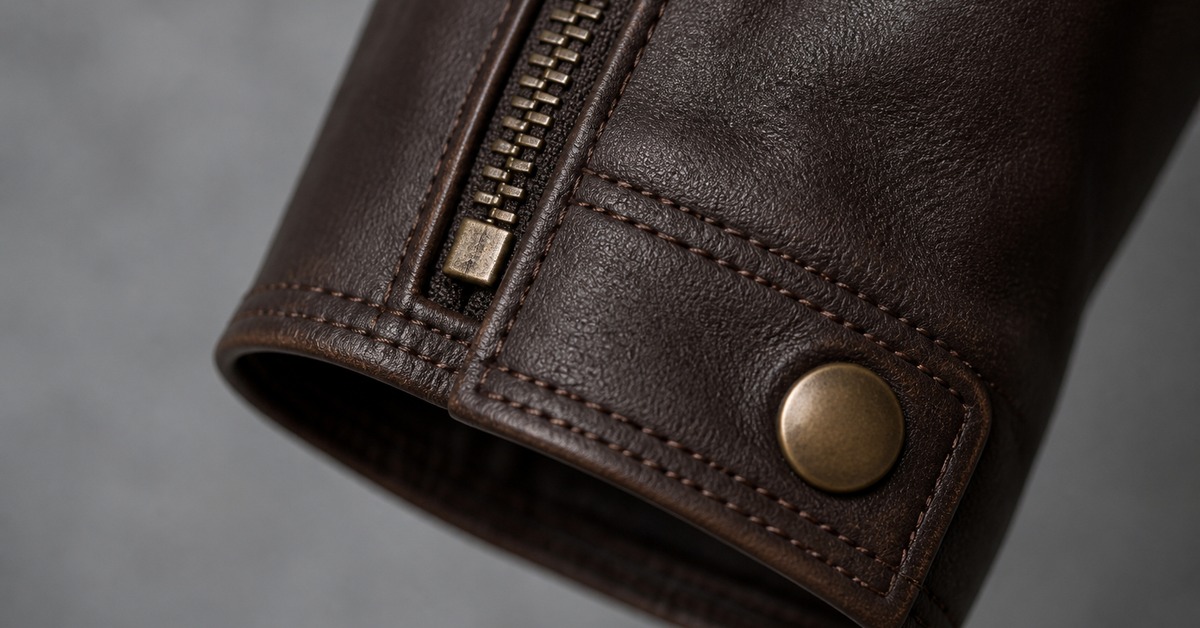
These steps matter more when development cycles are short. A supplier that answers specification questions in writing, with material data and production capacity, reduces the risk that a late-summer shipment arrives incomplete. Buyers reviewing lambskin leather jacket specifications can apply the same checks to lining, hardware and thread.
Danke, the brand of Dalian Danke Fashion Co., Ltd, produces men's leather jackets for custom and wholesale orders and works from approved specifications rather than catalogue images. Buyers can review the range at www.dankeleatherjacket.com, read common sourcing questions or send requirements on WhatsApp +86 13234076432.
How large are EU imports of leather apparel?
EU importers bought EUR 748.0 million of HS 4203 goods from outside the bloc in January to August 2026, 2.5 percent more than in the same period of 2025, according to Eurostat.
Which countries supply most leather apparel to the EU?
India, Pakistan and China were the three largest non-EU suppliers in the first eight months of 2026, followed by Turkey, Vietnam and Indonesia.
Does the Eurostat series measure volume or value?
It measures customs value in euros. Volume is not reported in this series, so the figures should not be read as unit growth.