EU Commission Briefs Textile Sector on Forced Labour Rules as December 2027 Deadline Nears
- Share
- publisher
- Melvin
- Issue Time
- Oct 30,2026
Summary
The European Commission briefed the textile sector on the EU Forced Labour Regulation on October 20, 2026, ahead of application on December 14, 2027. Buyers should hold product, facility and transaction records for every tier of the leather jacket supply chain.
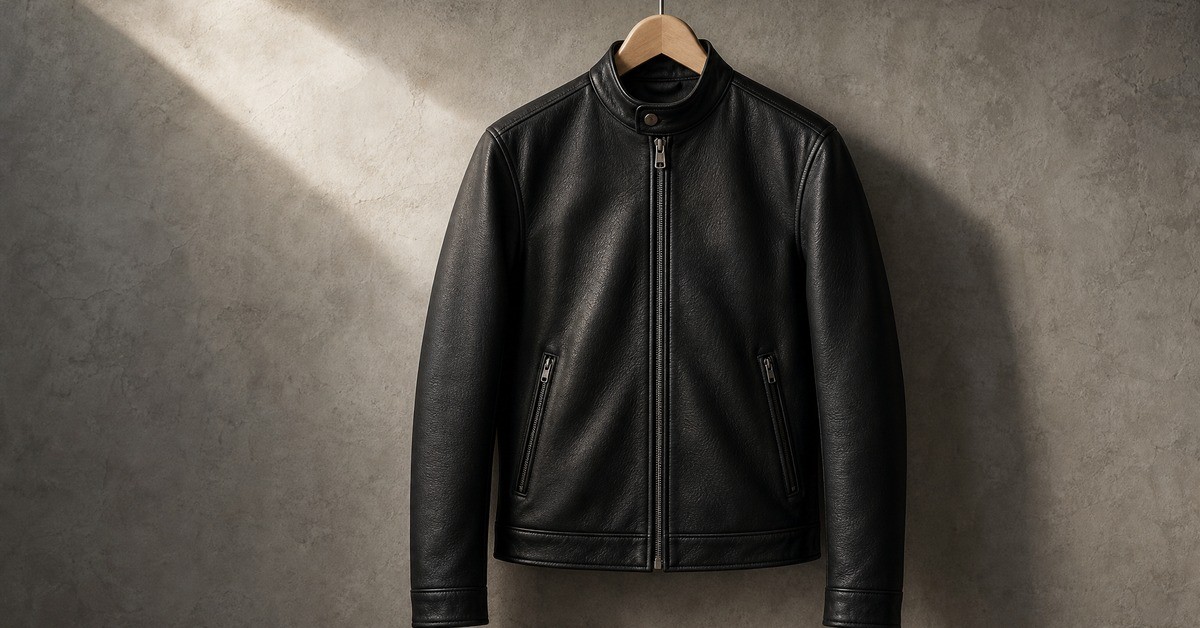
What the October 20 Briefing Covered
The European Commission held a textile-sector briefing on the EU Forced Labour Regulation on October 20, 2026, as part of the Commission's preparedness programme for the regulation. The session covered leather jacket supply chains directly, because the regulation reaches every production stage behind a finished garment.
The Commission's DG GROW forced labour team presented the regulation and its preparedness package, followed by business perspectives from EuroCommerce and EURATEX. The presentation material is now published on the Commission's Forced Labour Single Portal.
The legal text behind the session is Commission Notice C/2026/4637, published in the Official Journal on September 3, 2026. It sets out how authorities should read Regulation (EU) 2024/3015, which bans products made with forced labour from being placed on the EU market or exported from it. The ban applies to leather jackets in whole or in part, at any stage of production.
The Records Authorities Can Request
The guidelines describe a two-stage process. In the preliminary phase, a lead authority may ask a company for information on how it identifies and addresses forced labour risks in the products under assessment. It must consider the company's size and resources, and it must not ask twice for information already submitted, under a once-only principle.
For a leather jacket, the documents listed in the guidance are specific: product identification, the structure and actors of the supply chain, facility and location information, transactional and logistic records, and evidence of production capacity. The presentation adds that supplying a listed document does not by itself prevent a product from being banned.
Deadlines are tight. A lead authority has 30 working days after receiving a company's response to conclude its preliminary assessment. If a formal investigation opens, the company has 30 to 60 working days to answer, with the possibility of an extension. Non-cooperation is treated in principle as evidence, and a violation can then be established on the facts otherwise available.
Where Leather Jacket Supply Chains Are Exposed
At the briefing, EuroCommerce described a familiar pattern: Tier 1 factories are the best known, Tier 2 visibility is uneven, and Tier 3 sites remain rare. Risks can sit far upstream, at raw material production, where a brand or buyer has no direct contractual relationship.
The scale is not marginal. The International Labour Organization, Walk Free and IOM estimated 27.6 million people in forced labour worldwide in 2022, with 3.2 million of them, or 18.7 percent, in manufacturing. Commission figures presented at the session show that 80 percent of EU clothing imports come from seven countries, so a sourcing map built only on supplier names will miss the concentration of risk.
Leather adds stages that are easy to lose: hide collection, tanning, finishing and cutting. EURATEX noted that chain-of-custody documents track material flows but do not prove labour conditions, and that information quality falls sharply beyond Tier 1. That is the gap a buyer's file has to close before December 14, 2027.
What Buyers Should Have Ready Before December 2027
A workable file starts with a supplier register that names legal entities, site addresses and sub-contractors, rather than trading names alone. Add recruitment and wage policies that address worker-paid fees, a grievance channel workers can actually reach, and purchase records that link each order to a production site.
Audit reports, codes of conduct and corrective action plans help, but the guidance frames them as supporting evidence. The obligation is on the result, not on completing a prescribed audit. Documentation should be retrievable within weeks, not assembled after a request arrives, because the response window is measured in working days.
Danke produces men's leather jackets for B2B buyers. Buyers can review how a leather jacket is made in our factory, then send a documentation request with the tier and site details your compliance team needs.
Does the regulation require a specific audit or certificate?
No. The guidelines state that the regulation imposes an obligation of result and does not prescribe a due diligence method. They recommend a six-step process aligned with OECD guidance, and treat existing audits and scheme documents as supporting evidence rather than a safe harbour.
What if a supplier cannot identify Tier 2 or Tier 3 sites?
Say so within the deadline and show what the company is doing to close the gap. Authorities must weigh a company's size, resources and access to information, and may grant time to complete remedial steps. Silence is the bigger risk, because non-cooperation can be read as evidence.
Which products and which date are covered?
From December 14, 2027, the ban covers any product made in whole or in part with forced labour, including goods produced earlier that are still in warehouses or on sale. Online offers aimed at EU consumers also fall within scope.
Danke, the trading name of Dalian Danke Fashion Co., Ltd, produces leather jackets for B2B buyers and handles compliance documentation requests. For a documentation pack or a quotation, visit www.dankeleatherjacket.com or message WhatsApp +86 13234076432.
Sources: Commission Notice C/2026/4637 (Official Journal C, September 3, 2026) and the EU Forced Labour Single Portal.