UK Review Confirms Deforestation Rules Are Not Yet in Force: What Leather Jacket Buyers Should Verify
- Share
- publisher
- Melvin
- Issue Time
- Nov 4,2026
Summary
The UK government confirmed on November 3, 2026 that its deforestation due diligence regime is still not operating because secondary legislation has not been laid. Defra will consult later this year, with legislation expected in 2027.
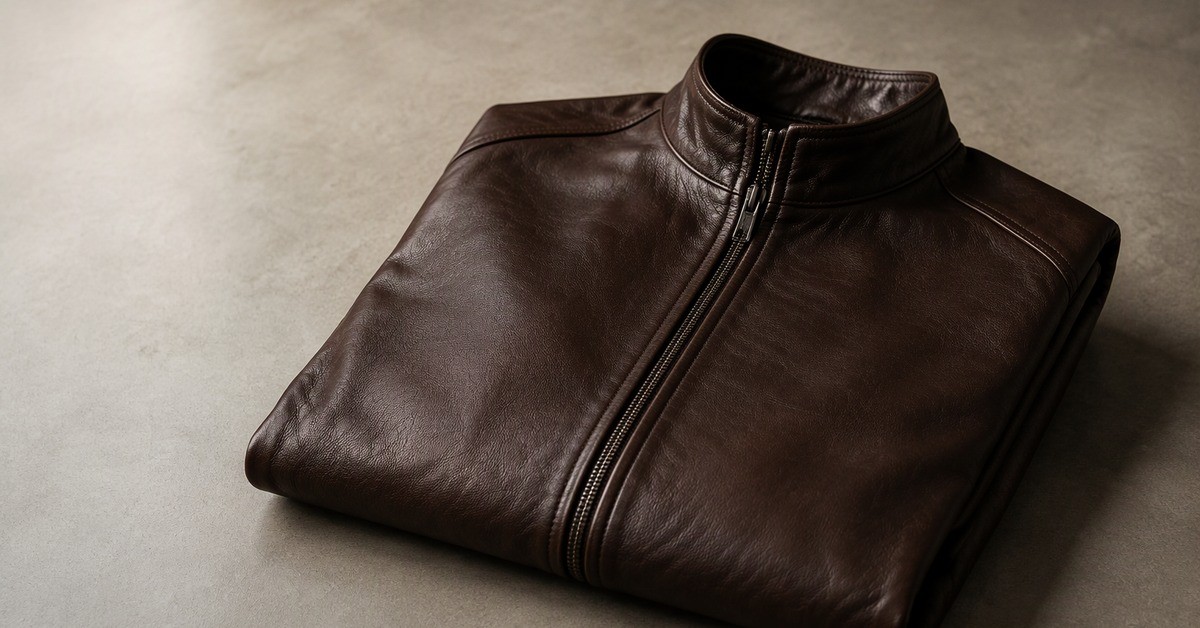
The UK government confirmed on November 3, 2026 that the deforestation due diligence regime created by the Environment Act 2021 is still not operating, because the secondary legislation needed to bring it into force has not been laid.
The finding appears in a post-legislative scrutiny memorandum published by the Department for Environment, Food and Rural Affairs (Defra), five years after the Act received Royal Assent. For a leather jacket buyer sourcing hides or finished garments, the document fixes the sequence still to come: a consultation, then regulations, then a duty on large businesses.
The memorandum reviews how each part of the Act has worked in practice. Its section on forest risk commodities is short and unusually direct, and it states plainly that the regime has no operative rules five years after the power was created.
What the Five-Year Review Says
Section 116 of the Act addresses illegal deforestation in supply chains. It prohibits regulated businesses from using forest risk commodities produced on land that was illegally occupied or used, and requires them to establish, implement and report on a due diligence system.
That system must assess and mitigate the risk of illegally produced commodities entering their supply chains. The Secretary of State holds the enforcement power and must report to Parliament on the regime's effectiveness.
The review states that the section “commenced on 30 September 2022” but “has been implemented for the purpose of making regulations only”. It then adds a sentence that matters more than the rest: “Secondary legislation to operationalise Schedule 17 of the Act has not been laid.” The post-legislative scrutiny memorandum itself runs to 74 pages and covers every part of the Act.
The same section records the government's June 23, 2026 announcement that it is strengthening its approach to deforestation in UK supply chains, and repeats the commitment to consult on proposed Great Britain policy “later this year”. No consultation launch date is given.
What the Proposed Regime Would Require
Defra's policy paper on the UK approach, published on June 23, 2026 and updated on September 2, 2026, sets out the intended shape of the regime. The aim is to require businesses in Great Britain with an annual turnover of over 1 million pounds, and which use forest risk commodities and wood products, to carry out due diligence that the goods were produced in compliance with relevant local law.
The listed commodities are wood, cattle, cocoa, coffee, palm oil, rubber and soy, together with certain derived products such as chocolate and furniture. Businesses would need to establish a due diligence system, report on their activity and hold proof of compliance, including geolocation data about the origin of the specific products.
Timing is expressed as intention rather than law. The policy paper says legislation to implement the regime “should be delivered in 2027”, and that the government will consult first, as our September outline of the proposed regime recorded. Until an instrument is laid and commenced, no due diligence or reporting duty exists for any commodity, cattle included.
Why the Leather Question Is Still Open
Cattle is named in the commodity list. Finished leather is not named among the examples of derived products. Whether tanned hides and finished leather jackets fall inside the final product scope will be settled by the consultation and the instrument that follows, not by this review.
The intended benchmark is the EU regime. Defra says the Great Britain rules should cover the same core commodities and information requirements as the EU Regulation on Deforestation-free Products, which applies in Northern Ireland in phases from December 30, 2026 for large and medium operators.
Under that arrangement the Office for Product Safety and Standards acts as competent authority for wood and rubber, and Northern Ireland's Department of Agriculture, Environment and Rural Affairs for cattle, cocoa, coffee, palm oil and soy.
For a leather jacket supply chain the exposure sits upstream of the sewing floor: the country and establishment where hides were raised, the slaughter and tanning steps, and the transaction records that connect them. Those are the fields a due diligence system is built to hold.
Questions Leather Jacket Buyers Are Asking
Does the regime apply to leather jackets today?
No. The enabling section has been in force since September 30, 2022 only for the purpose of making regulations, and no regulations have been laid. There is no operating due diligence duty, reporting obligation or enforcement process for forest risk commodities in Great Britain.
When could a duty begin?
Not before the consultation closes and secondary legislation is made and commenced. Defra's stated expectation is delivery in 2027. Buyers writing 2027 sourcing plans should treat that as provisional, because no instrument, commencement order or product list has been published.
What should a supplier be able to produce now?
Country of origin for the hides, the establishments where the cattle were kept, supplier names and addresses, and transaction records linking each lot to a purchase. A supplier that can already answer those questions in writing will move faster when the product scope is fixed.
Danke is the leather jacket brand of Dalian Danke Fashion Co., Ltd, a leather garment manufacturer in Dalian, China, producing private label and OEM programmes. The men's leather jacket range and the private label leather jacket programmes are documented at www.dankeleatherjacket.com, and specification requests can be sent by WhatsApp on +86 13234076432.