UK Packaging EPR Fees Now Follow Recyclability: What Leather Jacket Buyers Must Collect
- Share
- publisher
- Melvin
- Issue Time
- Nov 16,2026
Summary
PackUK and Defra guidance confirms that UK packaging disposal fees now follow recyclability ratings from 2026 data onward. Leather jacket buyers must collect component weights, materials and ratings from suppliers.
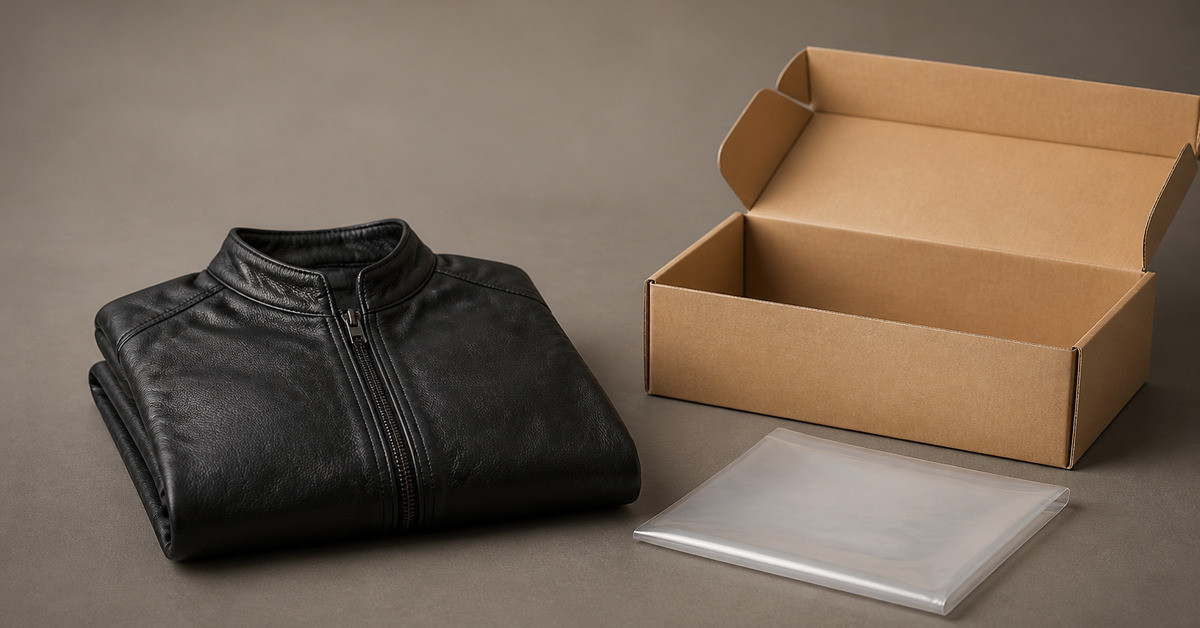
PackUK and Defra published dedicated guidance on packaging waste disposal fees on October 28, 2026, confirming that from 2026 packaging data onward each material fee is adjusted by the recyclability rating of the packaging. For UK brand owners and importers of leather jackets, the change turns packaging specifications into a financial control.
The fee no longer follows weight alone. Household packaging rated green pays less than the base fee, amber pays the base fee and red pays more, under the recyclability assessment methodology applied to an assessment year that runs from April 1 to March 31.
From data reporting to recyclability-linked fees
The scheme now covers the full cycle. A large producer is an organisation with annual turnover above £2 million that is responsible for supplying more than 50 tonnes of packaging in the UK. Registration for 2027 was due on October 1, 2026, and Defra's reporting guidance requires packaging data every 6 months.
Disposal fees apply to three packaging types: household packaging, packaging that commonly ends up in public bins, and glass household drink containers. Small producers do not pay them. PackUK's fee guidance sets out how the liability is calculated and collected.
Collection runs through a notice of liability issued at the end of each calendar year, usually paid in instalments. An instalment unpaid 50 days after its due date can attract interest and enforcement action, so the accuracy of the underlying data becomes a cash-flow question rather than an administrative one.
The component file behind one leather jacket
Packaging is reported component by component, by material and weight in kilograms. The material list is fixed: aluminium, fibre-based composite, glass, paper or card, plastic, steel, wood and other. For household and commonly binned packaging, plastic must also be split into rigid or flexible.

A men's leather jacket order typically generates a polyethylene film bag, a paper hangtag, a cardboard shipping carton, tissue paper and plastic packing tape. Each is a separate line with its own weight. The jacket, its lining and its hardware are the product, not packaging, and are not reported.
Each component also carries a packaging class: primary, secondary, tertiary or shipment. Shipment packaging is tertiary packaging on goods supplied to a consumer, and the guidance names cardboard boxes and mail bags as examples, so a direct-to-consumer carton sits there rather than with the garment bag.
Recyclability data is required for household packaging, for packaging that commonly ends up in public bins and for glass household drink containers, rated red, amber or green. Nation data is a separate record, by material and weight, of where in the UK the packaging is supplied or discarded.
Where the data usually breaks down
Most factories quote leather thickness, lining composition and hardware finish. Far fewer quote the weight of the film bag or the carton that protects the finished jacket, and those are the numbers the return needs.
A packaging specification sheet per order closes the gap: component name, material, plastic sub-type, measured weight in kilograms and the rating the material is likely to receive. Weighing 10 finished units and dividing gives a workable average, and the figures should be rechecked whenever a supplier changes bag gauge or carton construction.
The record has a long life. Large producers must keep required data for 7 years, so a specification sheet raised with a 2026 order stays inside the audit trail long after the shipment has cleared.
What it changes for buyers
Two levers sit with the buyer. The first is weight: lighter carton board or film lowers reported tonnage and, at the threshold, can remove the obligation. The second is rating: mono-material paper formats and components that separate by hand are more likely to be rated green than laminated or mixed-material constructions.
There is also an offset. Self-managed consumer waste that is genuinely recycled can be set against household packaging of the same material and reduce the fee, which rewards take-back arrangements over general waste.
For a private label programme, the sequence is short: request the component data with the purchase order, check it against the packaging actually received, and file it before the next 6-month return. Buyers who wait for the notice of liability are working with numbers they can no longer influence.
Danke (Dalian Danke Fashion Co., Ltd) manufactures private label leather jackets in Dalian, China, and can supply component-level packaging data with each order alongside the garment specification. The manufacturing process and material records behind each programme are documented before production begins.
Programme details are available at www.dankeleatherjacket.com. For a packaging data sheet or a specification review, message Danke on WhatsApp +86 13234076432.
Does a leather jacket count as packaging under UK EPR?
No. The garment is the product. The film bag, hangtag, carton, tissue and tape supplied with it are the packaging components, and each is reported with its own material and weight in kilograms.
Which packaging counts as household packaging?
The guidance requires an assessment of household or non-household status for every packaging activity. Shipment packaging sent to a consumer is the clearest household case; business-to-business cartons that never reach a household still have to be assessed and recorded.
When is the fee actually paid?
PackUK issues a notice of liability at the end of each calendar year. Payment is usually spread across instalments, and the due dates and amounts appear on the notice itself.