EU Customs Now Requires Product Identifiers on Distance Sales: What Leather Jacket Buyers Must Collect
- Share
- publisher
- Melvin
- Issue Time
- Nov 18,2026
Summary
On November 1, 2026, customs authorities in the 27 EU Member States began enforcing product identifiers for goods sold in distance sales to buyers in the European Union. The rule adds a data layer to the customs declaration, not a new product approval.
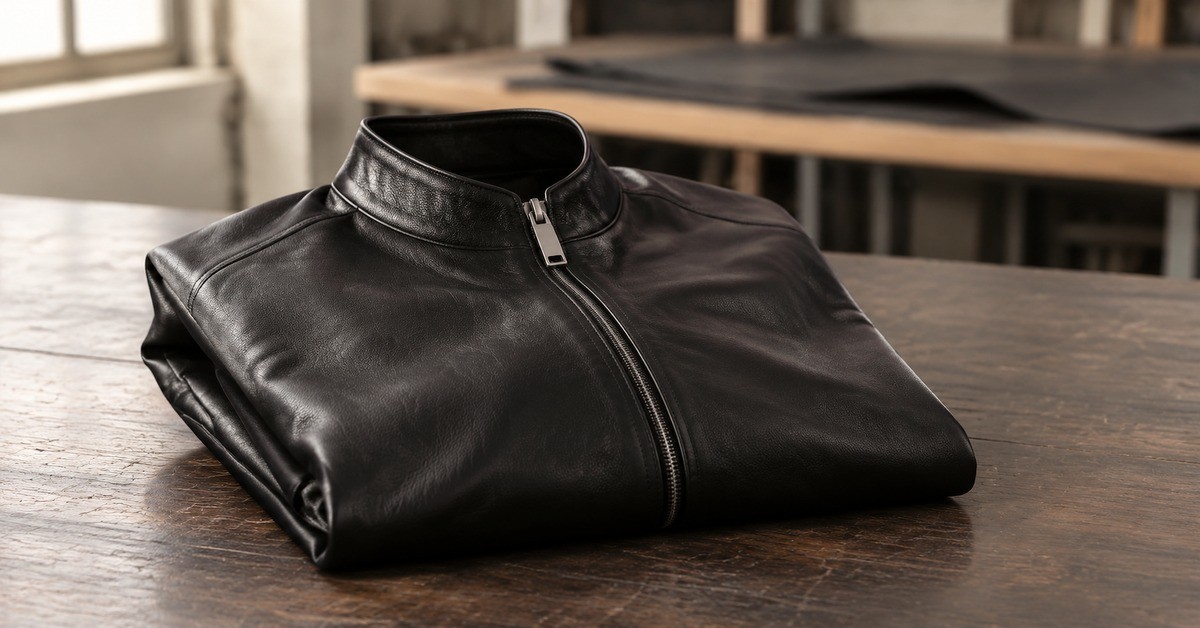
On November 1, 2026, customs authorities in the 27 EU Member States began enforcing product identifiers for goods sold in distance sales to buyers in the European Union. The rule adds a data layer to the customs declaration, not a new product approval. For a Leather Jacket programme sold online into the EU, it moves part of the compliance work upstream, to the style references a manufacturer already keeps.
The European Commission set out the requirement in a notice published on November 3, 2026. The rule uses 3 identifiers.
What changed on November 1, 2026
The merchant product identifier, or M-PID, is the reference a product carries on the website, marketplace or platform where it is offered. It is set by the seller or platform and is unique there. The non-standardised manufacturer product identifier, or NS-PID, links the item to its maker and model, using the manufacturer's own reference such as a style or part number.
The standardised manufacturer product identifier, or S-PID, follows an international format and normally appears as a barcode, such as an EAN, UPC or ISBN. Where no S-PID exists, the declaration must carry a specific exemption code. Operators could supply identifiers voluntarily from July 1, 2026; from November 1, 2026, the requirement is mandatory and enforced.
A further stage follows in July 2028, when broader product data requirements arrive with the EU Customs Data Hub.
Why customs asked for identifier data
The Commission frames the change as a control problem. In 2025, about 6 billion items were released for free circulation in the EU, 3 times the 2022 volume, while the control rate fell to 65 per million imported. Parcels bought online now account for over 97 percent of shipments entering the EU.
An EU-wide control action between April and June 2025 checked 20,040 pieces of toys and small electronics and found 64 percent non-compliant. Of 659 items sent for laboratory testing, 534 were confirmed non-compliant or dangerous.
The categories covered were toys, small electronics, cosmetics, food supplements and personal protective equipment. Leather apparel was not among them, but the identifier mechanism applies to distance sales generally.
The logic is traceability. When one product fails a control, identifiers let authorities extend the finding to similar items, including those sold by other sellers or on other platforms. The Commission states the aim is to protect buyers and to create fairer competition for compliant businesses.
What a leather jacket order file should carry
Most of the data already exists. Identifiers typically sit in product listings, on invoices or on packaging, and platforms and manufacturers pass them along. The declarant, such as an IOSS holder or a customs representative, reports them. In a jacket programme, those references first appear during the leather jacket manufacturing process, when the style is opened.
The practical questions are narrower. Does the factory's style number stay stable across repeat orders and colourways? Is there a retail barcode on the polybag or hangtag, or does the shipment rely on the exemption code? Which listing reference applies when the same style runs on a brand site and on a marketplace, given that the M-PID is platform-specific?
One jacket can therefore generate more than one M-PID, while the NS-PID and S-PID travel with the product itself. An order file that keeps all three references makes the declaration routine.
What buyers should confirm before the next shipment
3 checks cover most of the exposure. Confirm who files the declaration: the IOSS holder, the customs representative or an in-house team. Ask the manufacturer to fix the style reference in writing, and to state whether a standardised identifier exists or an exemption code applies. Then align the listing references used on each sales channel before launch, not after the first parcel is held.
Buyers running a private label leather jacket programme carry an extra step, because one factory style can be listed under several brand names. A master record per style, with every listing reference attached, prevents a routine control from turning into a document hunt.
Records also matter after clearance. Because identifiers let customs repeat a finding across sellers, a stable reference set supports a buyer when a similar product is stopped elsewhere.
Danke, the trading name of Dalian Danke Fashion Co., Ltd, produces men's leather jackets for private label and wholesale programmes. Buyers preparing a distance-sale launch in the EU can request the product reference data held for a specific order. The men's leather jacket range is published at www.dankeleatherjacket.com, and order questions can go to WhatsApp +86 13234076432.
Frequently asked questions
Do the identifiers apply to business buyers as well as consumers?
The requirement is written for goods sold in distance sales to buyers in the EU, with consumers as the main case. Where an order is placed at a distance and imported, the declarant reports the identifiers. Buyers working only through wholesale contracts should confirm the treatment with their customs representative.
What happens if a leather jacket has no EAN or UPC?
The declaration must indicate that no standardised identifier exists, using the exemption code. The M-PID and NS-PID still apply, so style and listing references remain mandatory.
Does an identifier replace product safety documentation?
No. An identifier is a data field that supports risk analysis and traceability. It does not replace declarations of conformity, test reports or labelling duties that apply to the product itself.