ECHA Finds 61 Percent of Online Offers Non-Compliant: What Leather Jacket Buyers Must Document
- Share
- publisher
- Melvin
- Issue Time
- Nov 25,2026
Summary
Inspectors in 27 European Economic Area countries checked 5,281 products sold online and found that 61 percent failed at least one requirement of EU chemicals law, the European Chemicals Agency reported on November 24, 2026.
Inspectors in 27 European Economic Area countries checked 5,281 products sold online and found that 61 percent failed at least one requirement of EU chemicals law, the European Chemicals Agency reported on November 24, 2026. For a leather jacket programme, the failures sit less in the garment than in what the seller publishes online and what the supplier can prove on paper.
The results come from REACH-EN-FORCE-13, a coordinated project run by ECHA's Enforcement Forum. Inspectors examined substances, mixtures and articles offered through online platforms and web shops, against the Classification, Labelling and Packaging (CLP) Regulation, restrictions on hazardous substances under REACH, and the Persistent Organic Pollutants (POPs) Regulation.
What the Project Checked, and What It Cannot Prove
ECHA describes the checks as risk-based and targeted at products where non-compliance was likely, and states that the results do not necessarily reflect the overall compliance level of all products sold online in the EEA. That caveat matters. The project maps where inspectors expect to find problems; it is not a market-wide audit.
Three obligations were in scope. Online offers for substances and mixtures had to carry the hazard information the CLP Regulation requires. Products had to respect the concentration limits set by REACH restrictions. Articles and mixtures had to stay inside the limits set for persistent organic pollutants.
Where the Failures Concentrated
Of 2,206 substances and mixtures checked for hazard information in online advertisements, 62 percent did not include the required information. Separately, 3,126 products were checked against REACH restrictions and 56 percent were non-compliant, with mixtures containing the restricted substance accounting for most cases.
The highest non-compliance rate concerned carcinogenic, mutagenic or toxic to reproduction substances in products intended for the general public, mainly through lead and borates.
Inspectors also recorded high rates for lamp oils, perfluoroalkyl carboxylic acids and phthalates, and found jewellery containing cadmium, nickel and lead above permitted limits. Under the POPs Regulation, 14 percent of checked products failed, mainly on short-chain chlorinated paraffins and perfluorooctanoic acid.
Non-compliance was more frequent on online platforms than in web shops, and more frequent among traders based outside the EEA selling through platforms, and in products manufactured outside the EEA, particularly articles. The Forum has asked platforms to strengthen measures that withdraw non-compliant offers and keep them from reappearing.
What a Leather Jacket Offer Has to Carry
A finished jacket is an article, so the CLP labelling duty does not attach to it in the way it attaches to a chemical product. The same purchase order often contains items where it does: conditioner, waterproofing spray, cleaner or a care kit. Each of those is a mixture, and an online offer for it needs the hazard information that its label carries.
Restriction limits apply to the article and to its components. Metal hardware, coatings, finishes and linings each bring substance families into scope, and the project's findings point to lead, nickel, PFAS and phthalates as areas inspectors are actively testing. Acting on that does not require a legal opinion; it requires one document per component, per material and per colour.
The geographic pattern is the commercially useful part. When non-compliance clusters with sellers outside the EEA, European buyers move the evidence requirement upstream, into the purchase order rather than the shipment. A supplier that can answer the document request at quotation stage keeps its programmes out of that cluster.
A Document Request to Send Before the Next Purchase Order
Ask for the material composition of the leather, lining and interlining, with the tannery and finishing supplier named. Ask which test reports exist for the finished article rather than only for the hide, and which laboratory issued them. Ask whether the care products in the assortment are labelled, and whether the offer text repeats the hazard statements where they are sold online.
Then ask which REACH restriction entries the hardware was assessed against, by alloy and by plating. Keep the answers with the order file, because that file is what a buyer's own customer will eventually ask to see. Documentation assembled after shipment rarely survives that request intact.
Danke, the brand of Dalian Danke Fashion Co., Ltd, manufactures men's leather jackets in Dalian for wholesale and private label programmes. Specification sheets and material records can be requested per order at www.dankeleatherjacket.com, or on WhatsApp +86 13234076432.
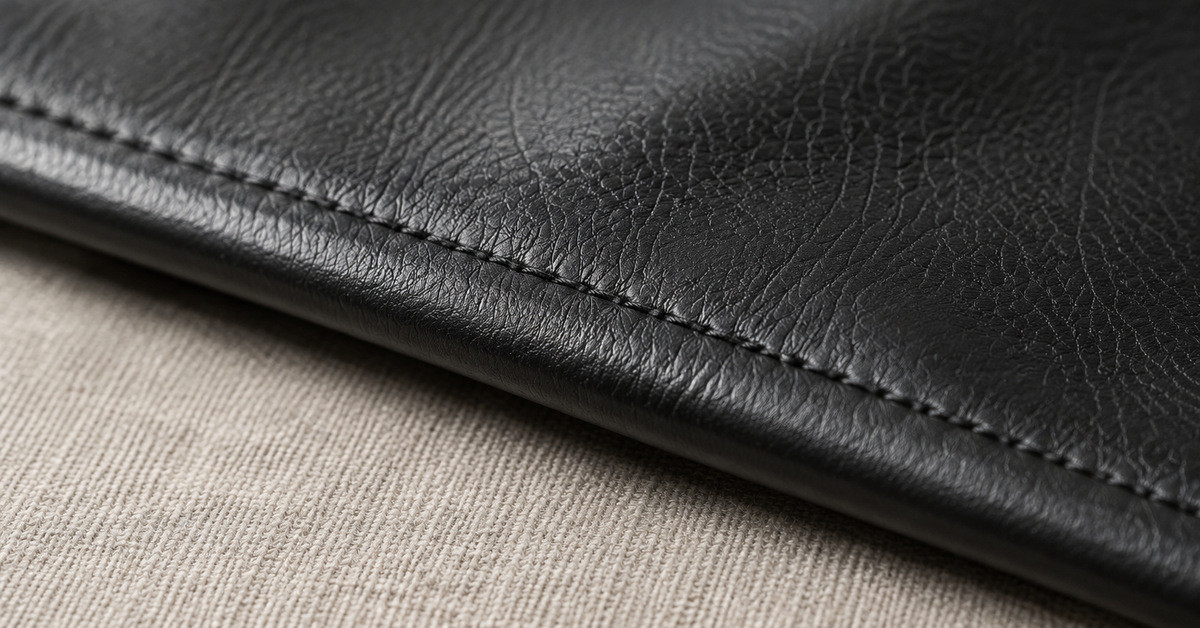
For the upstream side of the same file, the leather jacket manufacturing process page sets out how hides are graded, cut and finished before assembly, and the men's leather jackets range shows the constructions available to private label buyers.
Does EU chemicals law cover a leather jacket sold online?
Yes, as an article. REACH restrictions and the POPs Regulation set limits on substances in the product, and inspectors checked articles in this project. CLP labelling duties attach to the care products sold alongside a jacket rather than to the garment itself.
Who is responsible for the hazard information in an online offer?
The seller that publishes the offer. Inspectors checked online advertisements against the CLP requirement to show hazard information, and 62 percent of the substances and mixtures checked did not carry it. Platform operators face separate pressure, with the Forum asking them to withdraw non-compliant offers.
Is a tannery test report enough for the finished jacket?
Not on its own. A tannery report covers the hide, while hardware, lining, thread, coatings and finishes sit outside its scope. Buyers normally map each component to its own document, keyed to material and colour, and keep the set with the order.